Built for water & wastewater engineering firms

Know every rule. Reuse your best work. Keep the final call.

You bid a dozen agencies a year and every one of them has a different rulebook. You've passed on work you probably could have won, just because there wasn't capacity that week. We help small water and wastewater firms run public RFPs without the last-minute scramble, using the Microsoft 365 you already pay for.

10 to 200 people · municipal water and wastewater · bidding 12 to 30 times a year

A person approves every step. Go or no-go is always your principal's call, and we never hit submit.
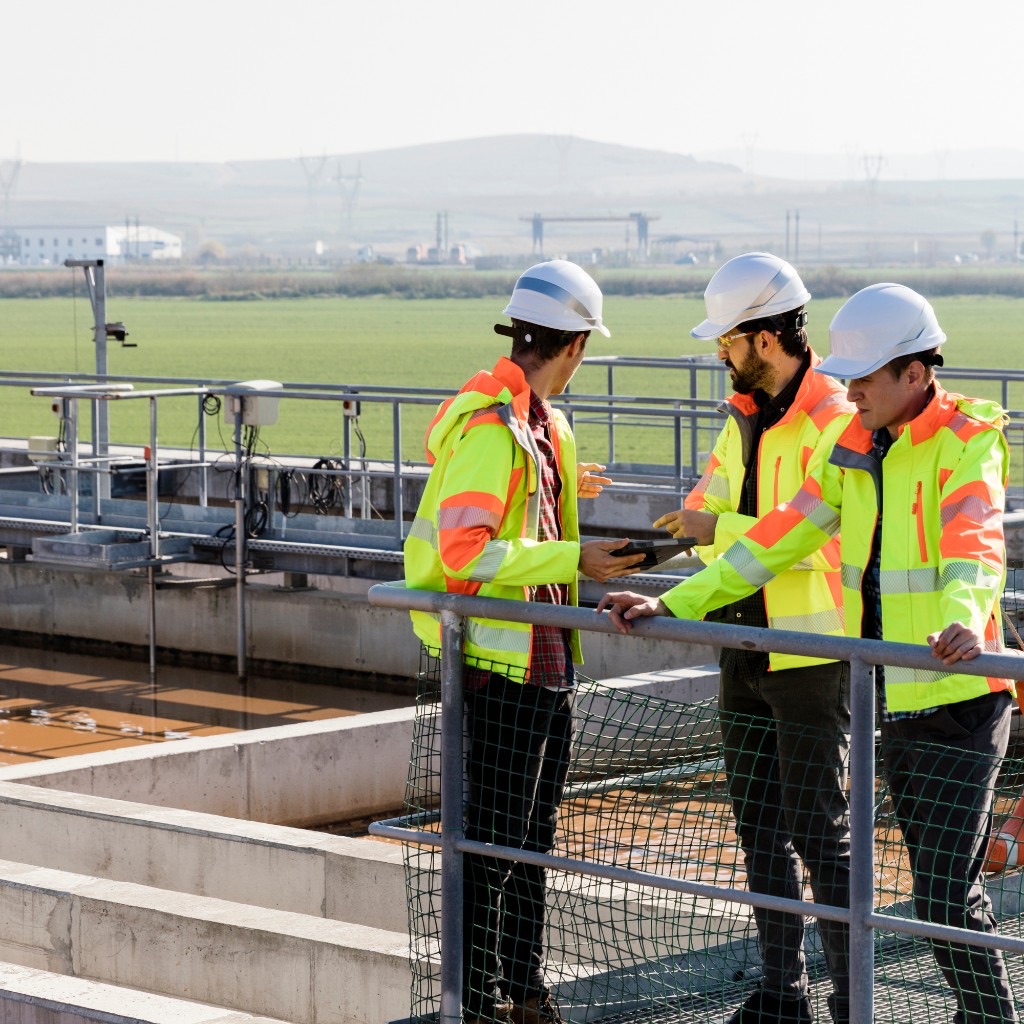
Engineers in safety gear reviewing a tablet together at a treatment plant
The compliance matrix

Every requirement pulled and quoted straight from the RFP

Your call: proposal manager approval
Draft assembly

Draft sections built from your approved library

Your call: SME review required
You decide: go or no-go
NGOZAI DOES THIS YOU DO THIS An RFP lands in your drop zone Every requirement pulled and quoted straight from the RFP Draft sections built from your approved library You decide: go or no-go Your engineers correct the drafts You hit submit
Ngozai does this You do this
  1. An RFP lands in your drop zone
  2. You decide: go or no-go
  3. Every requirement pulled and quoted straight from the RFP
  4. Your engineers correct the drafts
  5. Draft sections built from your approved library
  6. You hit submit

You keep the decisions. We handle the paperwork in between.

We build proposal tools for water and wastewater engineering firms.

Every one of them was built with real public agency RFPs open on the desk. They exist so your engineers can spend their week on engineering, and so each pursuit leaves the firm a little better organized than the last. Find the line below that sounds like your firm.

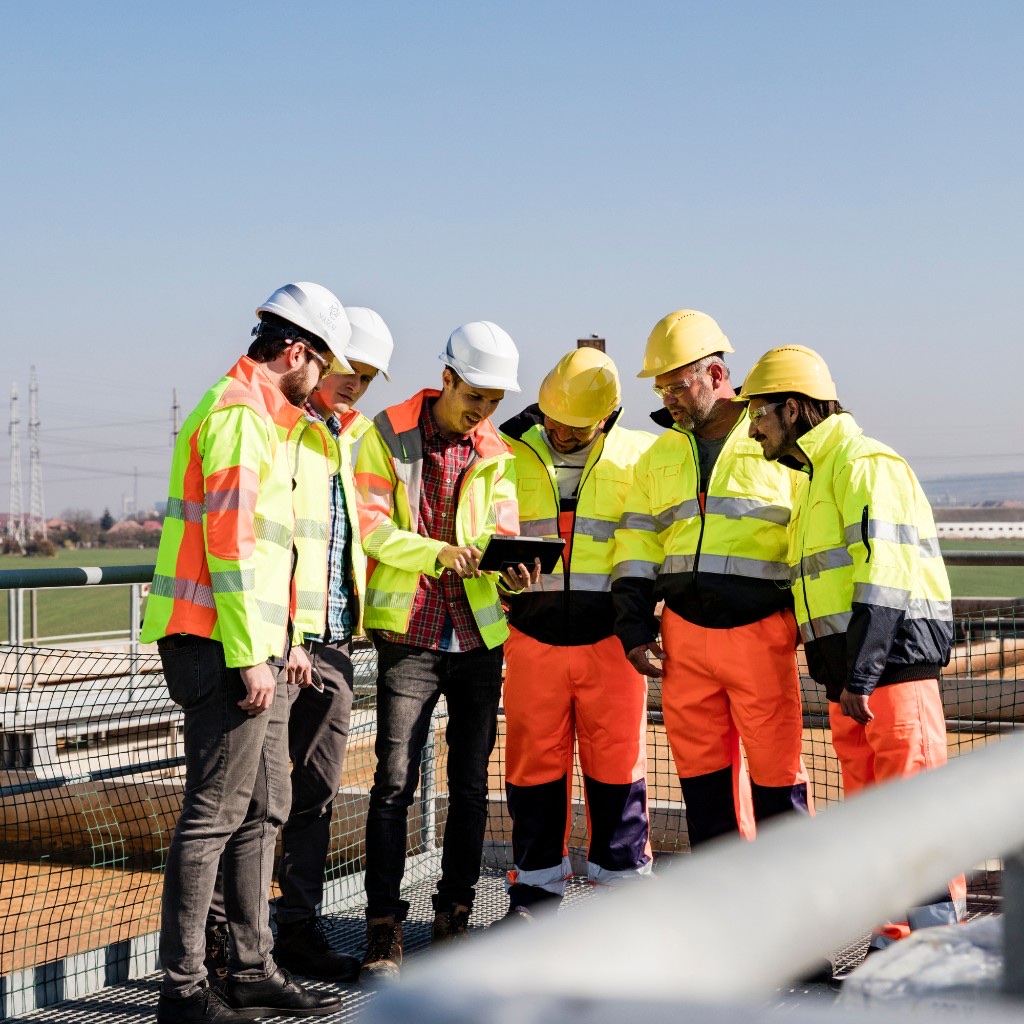
Engineers collaborating around a tablet on an elevated platform at a treatment facility
Pain points

Most of the work isn't the writing.

The technical narrative is the easy part. What burns the hours is hunting down the right resume, decoding contradictory submission rules, and chasing engineers who are already underwater on billable work. AEC firms average 16 working days on a single response, the longest of any sector surveyed (QorusDocs, 2025). At 20 pursuits a year, you have a proposal open on almost every working day. The three tools below exist to remove the hunt, the decode, and the chase.

Are you…

We write it down once. Page caps, sealed fee envelopes, exact file names, who signs in ink, which address it actually goes to. Encoded per agency, reused on every pursuit after that.

Engineers reviewing a tablet beside a wastewater treatment basin
Agency profiles

Page budgets, file names and size limits, copies and binding

Your call: layout owner sign-off

We make it a lookup, not a hunt. Your people and project sheets get tagged by discipline, registration, and client type, so a retired reference can't quietly show up in a draft.

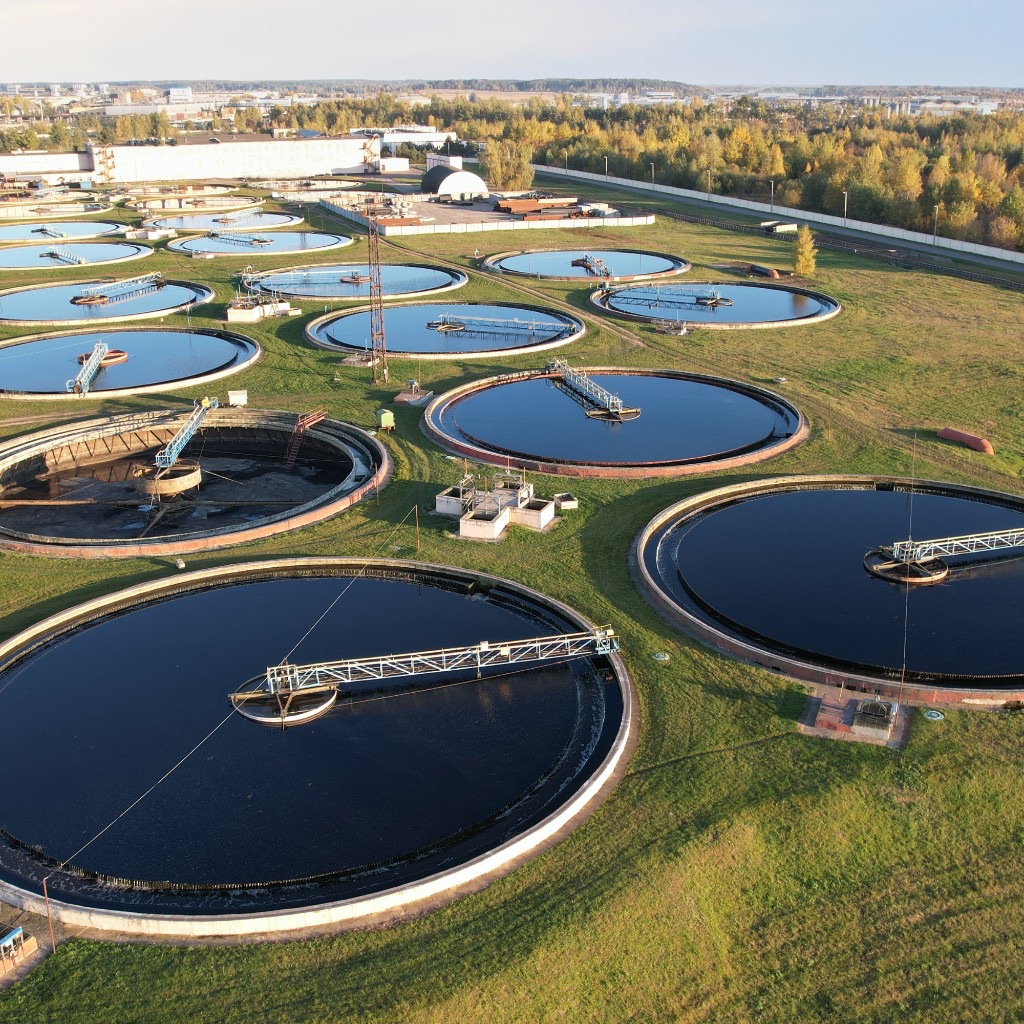
Aerial view of clarifier tanks at a wastewater treatment plant
Draft assembly

Sections built from your approved library and nothing else

Your call: SME review required

We hand them something to fix, not a blank page. Draft sections come back built from your own approved content, with the gaps marked, so your SMEs edit instead of starting over.

Field technicians with a laptop walking a treatment plant site
Draft assembly

Draft sections built from your approved library

Your call: SME review required

We help you see it before you decide. When an RFP lands, you get the requirements pulled out and a read on what your library already covers, in time for the go or no-go call.

Engineers in safety gear gathered around a tablet under an open sky
The compliance matrix

Every requirement pulled and quoted straight from the RFP

You decide: go or no-go
What you get

Three tools. A person holds the gate on each one.

All of it runs on Microsoft's own agent platform, inside your tenant, on licenses you already own. It's also a practical way for your team to grow into working with AI: they learn it by using it, inside the tools they already know, with a person approving each step.

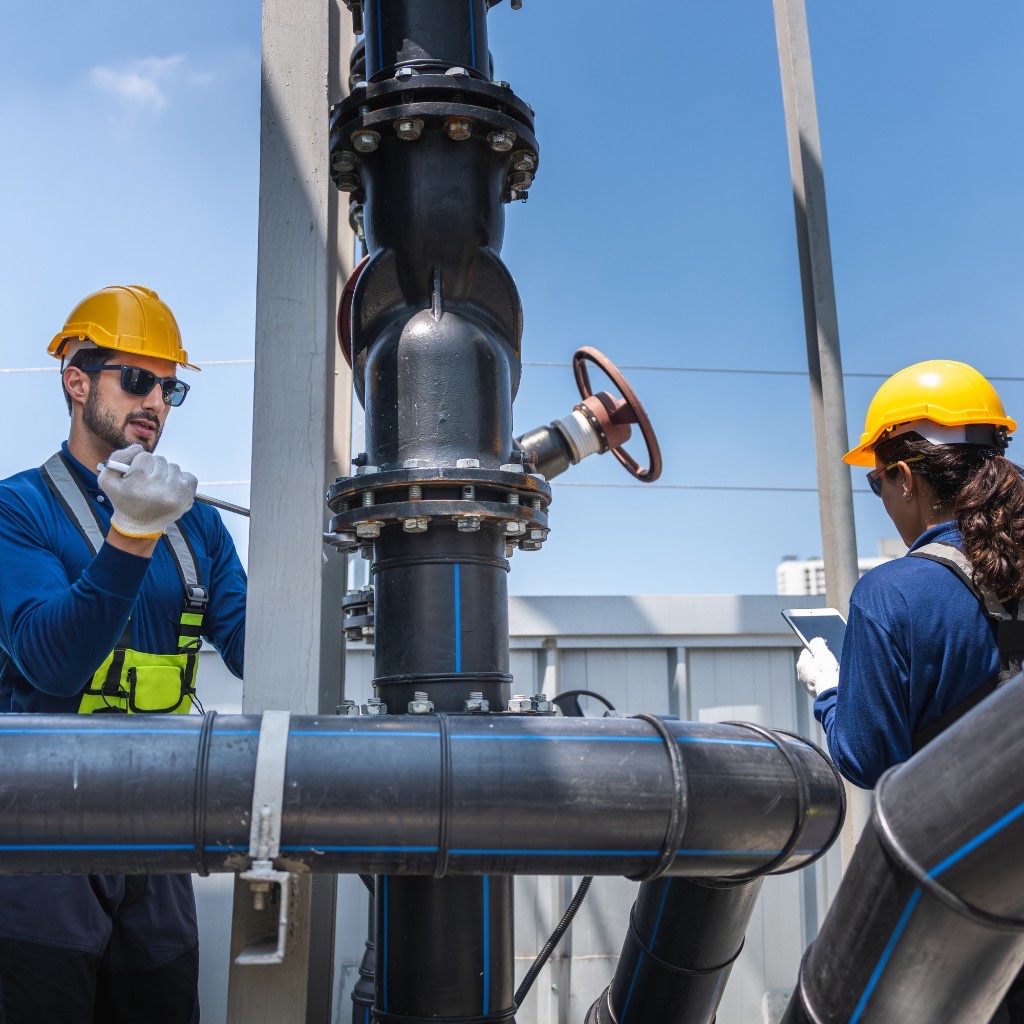
An engineer inspecting industrial piping with a tablet at a treatment facility
Your call: proposal manager approval

The compliance matrix

Point it at the RFP and it pulls out every requirement, quoted word for word, with the page it came from. Where the document contradicts itself or leaves something unclear, it raises a question instead of guessing. Your proposal manager checks the matrix against the RFP before anyone leans on it.

Your call: layout owner sign-off

Agency profiles

Each agency's submission rules, captured from their real RFPs: page budgets, file names and size limits, copies and binding, what goes in a sealed envelope, deadlines with the time zone attached. Your layout owner signs off before the package is locked.

Your call: SME review required

Draft assembly

Sections built from your approved library and nothing else. Where you don't have the content, it says so plainly instead of writing around it. Web search and outside knowledge are switched off on purpose. Your SMEs correct and tailor. Nothing goes out uncorrected.

Who we work with

Water and wastewater.

If you bid the work below, we already speak your agencies' language.

Aerial view of circular clarifier tanks at a wastewater treatment plant

Distribution and Collection Systems

Replacement, hydraulic modeling, flushing programs, condition assessment, master plans.

Treatment

Water and wastewater plant treatment design, upgrades, capacity studies, SCADA work.

On-call and task order

Multi-year as-needed agreements with cities, districts, and utilities. The ones you chase most often: 3-year base terms with two 1-year options, SOQs scored on project sheets and staffing, and task-order amendments that follow once you're on the list.

Grant-funded projects

SRF and WIFIA work, with the extra layer that comes with it: CEQA, BABA, American Iron and Steel, Davis-Bacon, DBE.

If your firm is not water or wastewater, the same RFP agents and the same implementation still apply. Water and wastewater is where we encoded the first agency profiles. For other public-sector engineering practices, we encode yours the same way.

How we start

We implement.

This works like how you buy engineering services: we scope the work, you approve it, we deliver it in stages, and you own what we build. Each stage has a fixed price and a clear deliverable. The whole build typically runs 8 to 12 weeks from kickoff to first live pursuit.

Two field technicians with a laptop and equipment walking a treatment plant site
Discovery (2 weeks)

Readiness review

We look at how your firm puts a proposal together today: where the hours go, what's in your content library, who can see what in your files, and how much the rules vary across the agencies you bid most. You get a written report with the gaps ranked and a plan. It's yours to act on with or without us, and the fee comes off the build if you continue.

Build (2-4 weeks)

Your library and agents

We rebuild your resumes, project sheets, and boilerplate into something your team can actually find, inside your own SharePoint. Then we configure the three agents (compliance matrix, agency profiles, draft assembly) and train your team on the approval gates. Everything gets tagged, tested on a real RFP, and handed off with documentation.

Run (first 90 days)

We stay close during launch

The first three pursuits after go-live, we're on call. New agency profiles as you need them, tuning when something doesn't fit, and a check-in after each RFP closes to see what worked and what didn't. After that, ongoing support shifts to a set monthly retainer with clear scope.

Working together

You'll be talking to the people who built it.

A project manager shaking hands with a client at a construction site

Ngozai™ is two founders. When you call, you get one of us, the same people who encoded the agency profiles and built the agents your team will be working with. We've encoded submission rules from East Bay MUD, Valley Water, OCSD, and a dozen other agencies by reading their actual RFPs page by page.

We built this for public-sector water and wastewater pursuits. We know why a Mini-Brooks SOQ gets scored differently than a full technical RFP, why DIR registration matters for some on-calls but not others, and what actually changes when SRF or WIFIA funding shows up in the boilerplate. We built the agency profiles by reading the actual RFPs, not by adapting a generic template.

Everything lives in your tenant: your library, your agents, your data. We don't hold any of it. Most firms keep a monthly retainer for tuning and new agency profiles, but the build is yours either way.

What we won't do

  • Promise you a better win rate. Nobody can honestly do that.
  • Let anything go out without a person reviewing it first.
  • Hit submit for you. That stays your job, on purpose.
  • Move your data anywhere. It never leaves your tenant.
  • Quote you a number we can't point to a source for.
What the research says

If we can't name the source, we don't put the number on the page.

Here's what published research actually says about proposal work in this industry. We label each figure as vendor research, association research, or industry research: vendor-run studies co-designed with associations like ACEC, AIA, and SMPS, where the methodology sits in between.

An engineer working on a laptop with blueprints and a hard hat on the desk
63%

of A/E/C marketing teams spend more than half their time working on proposals.

OpenAsset, State of AEC Marketing, 2024 · 360 AEC marketing professionals · vendor research
16 days

is the average time an AEC firm spends on a single response, the longest of any sector in the survey.

QorusDocs, Proposal Management Benchmark, 2025 · vendor research
44.4%

is the median capture rate across A/E firms: the dollar value of proposals awarded against the dollar value submitted. Down 3.8 points, and the lowest it's been since 2019.

Deltek Clarity A&E Industry Study, 47th ed., 2026 · 896 firms · industry research (ACEC, ACEC Canada, AIA, SMPS)
+32%

more proposals submitted in 2025 than the year before, while the total value of those proposals grew only 12%. More bidding, for smaller jobs.

Deltek Clarity A&E Industry Study, 47th ed., 2026 · 896 firms · industry research

Where we're straight with you

We're two founders, self-funded, and early. We created a working build, agency profiles encoded from real public agency RFPs, and compliance matrices produced from real public solicitations. Ask and we'll show you one before you commit to anything.

Here's what we want to measure: how much work firms never bid at all, just because there wasn't capacity that week. It doesn't show up in a win rate. Most firms we talk to have never counted it. Count it yourself with the No-Bid Cost Calculator, or work with us on one live pursuit, before and after, using your numbers, and we'll show you the result either way.

Design partners

We're currently taking on firms at founder pricing.

Design partners shape what this becomes. We sit with your team through one live pursuit from start to finish, measure what changes, and build around what your firm actually needs. Typical timeline from kickoff to first live RFP: 8 to 12 weeks.

  • Founder pricing on the full build
  • We measure one live pursuit before and after, using your numbers
  • A reference only if you decide to give one, in writing, afterward
Book a Design Partner Walkthrough No-Bid Cost Calculator
A team of engineers in safety gear reviewing a tablet at a facility